
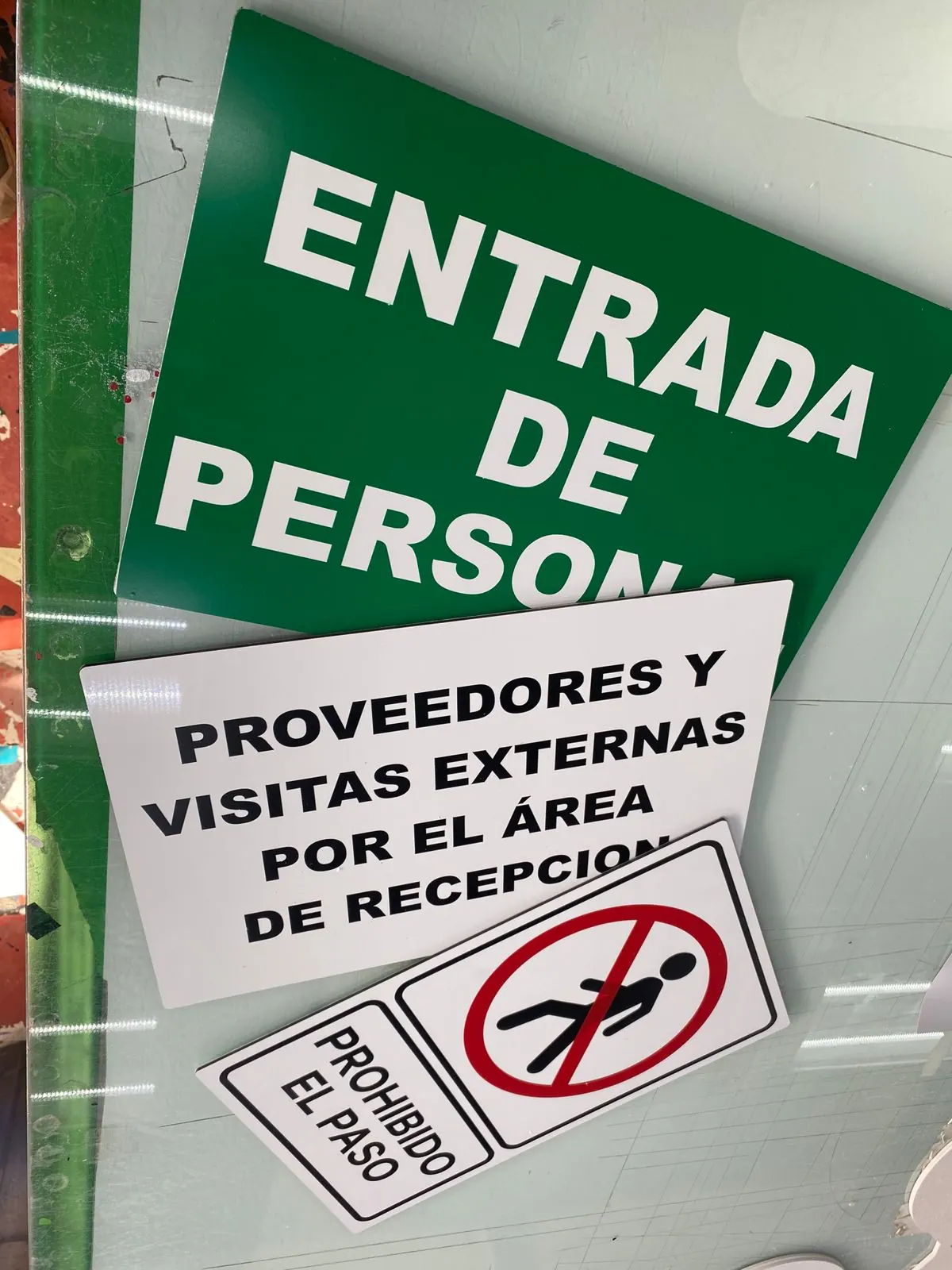
Many plants in Tijuana get visitors from the US every week: auditors, corporate engineers, customers checking their product on the line. Sooner or later someone asks whether the signage should also be in English.
The short answer is that it depends on the wall.
Where it pays off
In the areas visitors walk through: reception, the visitor route, conference rooms, general evacuation routes and entrances. There a bilingual sign keeps an outsider from getting lost or missing a restriction.
Also on the boards corporate reviews: if the auditor reads them in English, having both languages saves translating out loud during the walk.
Where it gets in the way
On the operating sign, the one an operator reads ten times a day next to the machine, a second language takes size away from what matters. One short instruction in large type reads faster than two instructions in small type.
How to design it so it works
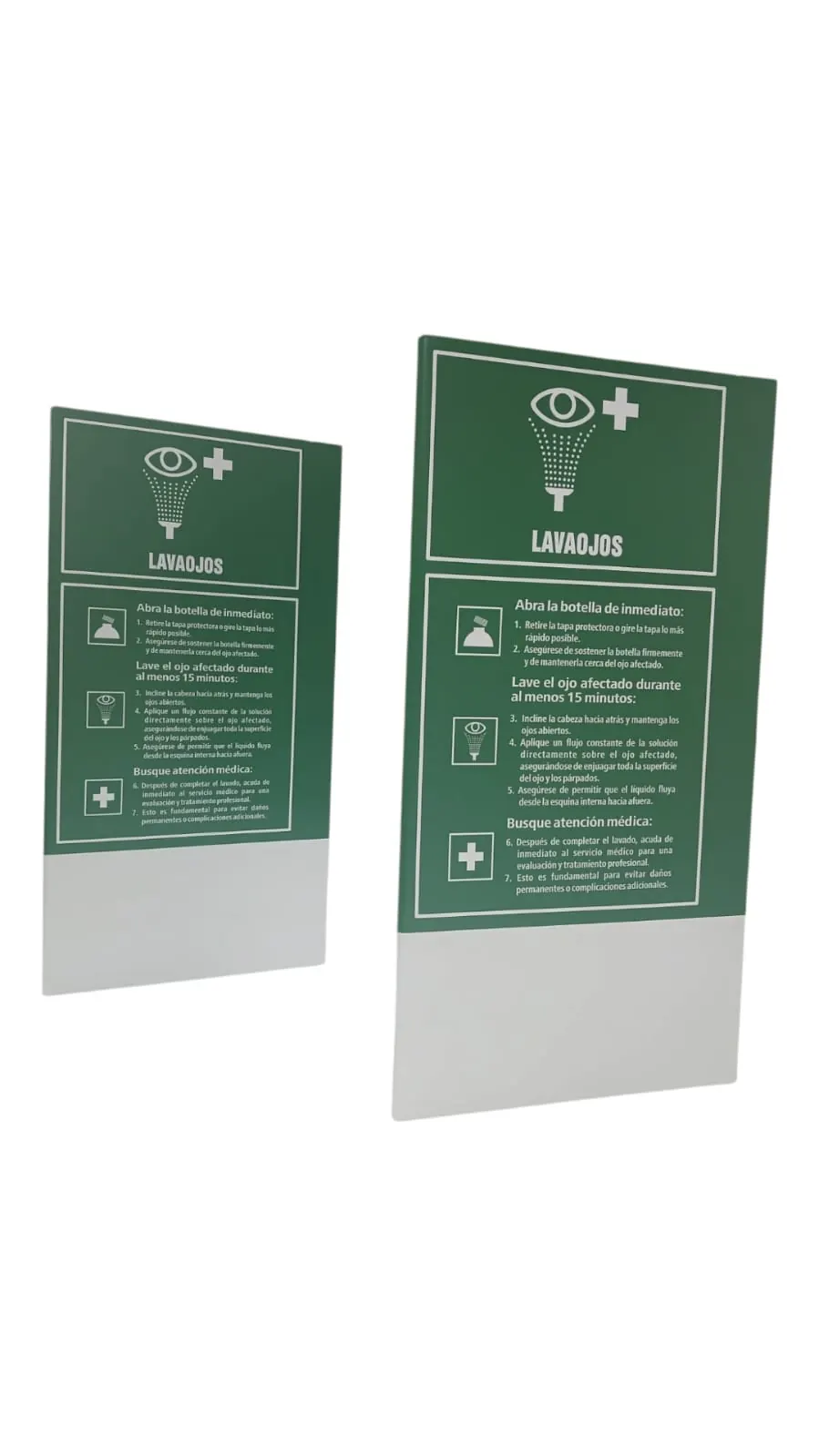
Spanish goes first and larger, with English underneath in a tone that does not compete. The pictogram, when there is one, carries the message for every reader.
If the plant does a full survey, mark by area who reads each sign. That shows which pieces need both languages and which do not, and avoids paying for double text where nobody needs it.
What it does to the cost
A bilingual sign needs more area for the same type size, or smaller type in the same area. That is why converting the whole plant to two languages by default rarely makes sense.
When the survey separates visitor areas from operating areas, the extra cost stays only where it helps, and the rest of the plant keeps larger, clearer signs.
Can you translate the text?
We help put together the English version, but if corporate has its own terminology, use theirs.
Do the signs follow Mexican standards?
We build them with the colors and symbols NOM-026 calls for and note it on the quote. The second language gets added without changing that.
Do you survey the plant?
Yes. We do an on site survey and a proposal by area, and enter with REPSE, IMSS and liability insurance current.