
Almost every quote request we get starts the same way: I need a part in acrylic. Sometimes it really is acrylic. Other times the right material was something else and nobody said so in time.
The difference does not show up on installation day. It shows up a year later.
All three look the same on the sheet, and that is where it starts
Set side by side, clear acrylic and clear polycarbonate are nearly indistinguishable. Foamed PVC does look different, but on a quote it is just another line with a price per meter and nothing explaining what it is for.
So the decision gets made on price. And price, here, is the worst advisor, for a reason that has to do with what happens to the part once it is mounted.
Acrylic: the best looking one, as long as nobody hits it
Acrylic gives the best face. It cuts clean, polishes like glass, does not yellow in the sun, and laser engraving reads deep on it. For an award, a display case, a brochure holder or a reception sign, nothing beats it.
Its limit is impact. Well-mounted acrylic lasts years, but if something strikes it on edge it does not dent. It shatters. Which is why it works so well on a counter and so badly as a machine guard.
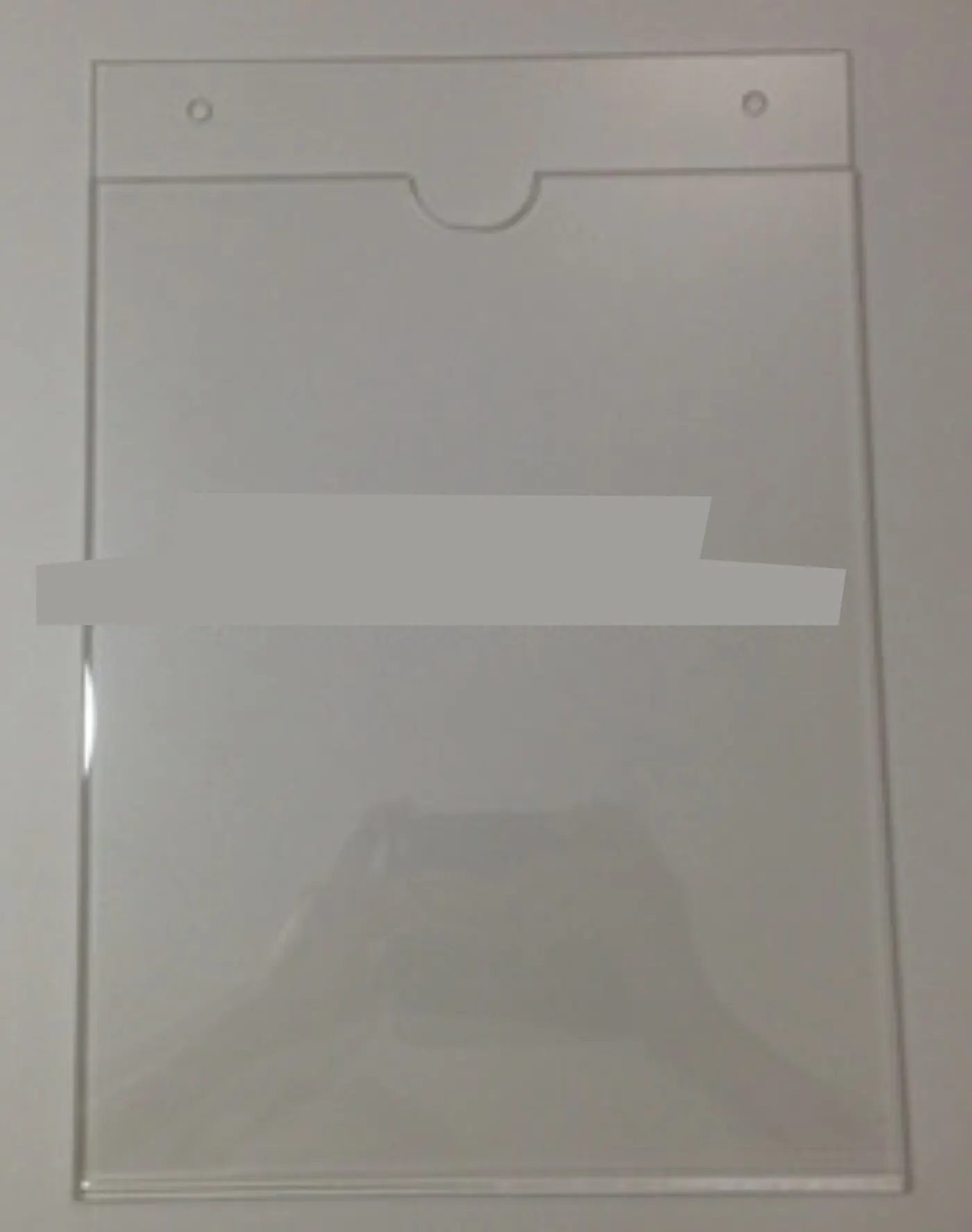
That covers half the parts we make. The other half lives on a production floor, and there a different material wins.
Polycarbonate: ugly up close, nearly impossible to break
Polycarbonate costs more and does not polish as fine. In exchange it takes impacts that would put acrylic on the floor, and it bends cold without cracking.
That is where paying for it makes sense:
- Machine guards and enclosures, where a hit is part of the day rather than a rare accident.
- Barriers in a forklift aisle or next to a swinging door.
- Inspection windows somebody will open and close a thousand times.
- Any part where a fracture is not just an expense but a risk to whoever is standing near it.
If your part is on that list, acrylic is the expensive option. Not the first time. The third.
Foamed PVC: the one almost nobody asks for by name
Foamed PVC is not clear and does not pretend to be. It is light, rigid, inexpensive, and it screws or bonds without drama. For interior signage, rack identification, area signs and wall lettering, it does the same job as acrylic at a fraction of the cost.
Its limits are sun and its own weight: in direct exterior it bows over the years, and it will not hold large pieces without reinforcement.
You have seen all three. What is missing is the question that actually decides, and it is not which material is best.
The question we ask before quoting
We do not ask what material you want. We ask what is going to happen to the part once it is mounted: who touches it, what can hit it, whether it gets sun, whether somebody cleans it with solvent and how often.
With those answers the material picks itself, and it almost always lands on one of three outcomes. The part you asked for in acrylic goes in PVC and you save half. The one you asked for cheap needs polycarbonate because it sits in a strike zone. Or the one you asked for is right and only the thickness needs adjusting.
Thickness is the other thing almost nobody specifies. A 3 mm barrier and a 6 mm barrier look identical on a quote and behave differently the first day somebody leans on one.
How to ask so nobody has to guess
Send the dimensions, a photo of where it goes, and one line about what happens around it. With that we tell you which material fits and why, even when the answer is the cheapest of the three.
Does polycarbonate scratch more than acrylic?
Yes. It is softer at the surface and marks sooner. That is why visible pieces go in acrylic and protective pieces go in polycarbonate: you trade appearance for resistance on purpose.
What thickness do I ask for if I do not know?
Give us the dimensions and what it holds. As a reference: 2 to 3 mm for signage and document holders, 4 to 6 mm for barriers and display cases, and 9 to 18 mm when the piece carries weight or gets bolted through the edge.
Does acrylic yellow in the sun?
Quality acrylic does not. What yellows is usually another plastic sold as acrylic, or PVC in direct exterior. It is one reason to name the material in the quote.